Predictive Maintenance in 5 Steps: No AI, No Sensors, Just Your Existing Data
Chang

Everyone hears "predictive maintenance" and imagines AI, machine learning, and IoT sensors magically predicting the exact date a machine will break down. The reality? That is the end goal, not the starting point. Most teams that succeed with predictive maintenance did not start with sophisticated algorithms. They started with their existing breakdown records and a structured approach.
The good news is that most maintenance teams can begin predictive maintenance today with nothing more than what they already have: their breakdown history, a simple criticality framework, and the discipline to track preventive maintenance compliance. No sensors required. No data science degree needed. Just practical, data-driven thinking.
The Predictive Maintenance Myth
There is a persistent misconception that predictive maintenance requires a massive technology investment. People imagine vibration sensors on every motor, thermal cameras scanning every electrical panel, and a team of data scientists training machine learning models to predict the precise moment a bearing will fail.
That vision is real, and some organisations do operate at that level. But it represents the advanced end of a long spectrum. The foundation of predictive maintenance is much simpler: good historical data and systematic analysis.
Think of it this way. A doctor does not need an MRI to tell you that your cholesterol is high. A blood test and your medical history are enough to predict cardiovascular risk. Similarly, your maintenance team does not need IoT sensors to predict which equipment is most likely to fail next. Your breakdown records already contain that information. You just need to know how to read them.
You do not need to jump to the advanced stage. Start where you are. Build the foundation first. The sensors and algorithms can come later, and they will be far more effective when built on top of clean, structured data.
Step 1. Start With Your Breakdown Data

The first question to ask yourself: do you have a reliable record of breakdowns? Specifically, do you know the dates when breakdowns occurred, which equipment was involved, how long the downtime lasted, and what the root cause was?
If the answer is yes, you already have your raw material. If the answer is no, or if your records are scattered across WhatsApp messages, Excel files, and paper logbooks, then your first step is to start collecting this data in a structured way. Every breakdown that happens from today onwards should be recorded with those four data points: date, equipment, duration, and cause.
With reliable breakdown data, you can calculate two powerful metrics that form the backbone of predictive maintenance:
MTBF (Mean Time Between Failures) tells you how reliable a piece of equipment is. The formula is simple:
MTBF = Total operational hours / Number of failures
If a chiller ran for 8,000 hours over the past year and failed 4 times, its MTBF is 2,000 hours. That means you can reasonably expect a failure roughly every 2,000 hours of operation.
MTTR (Mean Time To Repair) tells you how quickly you recover from failures:
MTTR = Total repair time / Number of repairs
If those 4 chiller failures took a combined 20 hours to repair, your MTTR is 5 hours. That means each failure costs you approximately 5 hours of downtime.
These two numbers alone give you powerful insights into equipment reliability. A low MTBF means frequent failures. A high MTTR means each failure is expensive in terms of downtime. Equipment with both low MTBF and high MTTR should be at the top of your attention list.
Step 2. Rank Equipment by Criticality
Not all equipment is equal. A chiller failure in a data centre is catastrophic. A desk fan failure in the pantry is an inconvenience. Your predictive maintenance efforts should be focused where they matter most, and that means ranking your equipment by criticality.
Here is a simple criticality ranking framework you can apply to every piece of equipment in your facility:
- Impact on operations if it fails (High / Medium / Low). Does the failure stop operations, reduce capacity, or have minimal effect?
- Safety risk if it fails (High / Medium / Low). Could the failure endanger people?
- Cost of repair or replacement (High / Medium / Low). Is it expensive to fix or replace?
- Availability of spare parts (Difficult / Moderate / Easy). Can you get parts quickly, or does it require weeks of lead time?
- Historical failure frequency (Frequent / Occasional / Rare). How often has this equipment broken down in the past?
For a more structured approach, assign numerical scores to each factor. For example, rate each on a scale of 1 to 5, then multiply severity by probability to get a Risk Priority Number (RPN).
Equipment with a high RPN score is where your predictive maintenance efforts should be concentrated first. There is no point in spending time predicting the failure of low-criticality equipment when your critical assets are the ones that will cost you the most when they go down.
Step 3. Review Your Preventive Maintenance Compliance

Pull your preventive maintenance records. How many scheduled PMs were completed on time? How many were delayed or skipped entirely?
This is a critical input that many predictive maintenance frameworks overlook. Equipment with consistently delayed PMs carries a significantly higher risk of unexpected breakdown. If a chiller is supposed to receive a quarterly filter change and compressor inspection, but those PMs have been delayed by 3 to 4 weeks for the past year, the risk profile of that chiller is very different from one that has been maintained on schedule.
Weight this into your risk calculation. On-time PM completion should lower the risk score. Delayed or missed PMs should increase it.
This creates a direct, measurable link between PM discipline and predicted reliability. It also gives your team a tangible reason to prioritise PM completion: every delayed PM directly increases the predicted failure risk for that equipment.
Step 4. Build Your Predictive Risk Report
Now combine all three inputs: breakdown history (MTBF and MTTR), criticality ranking (RPN), and PM compliance rate.
Create a simple scoring matrix for each piece of equipment. You can do this in a spreadsheet or, better yet, in a CMMS that links all this data together. For each asset, calculate a combined risk score:
- High breakdown frequency (low MTBF) = higher risk
- High criticality (high RPN) = higher risk
- Delayed PMs (low compliance rate) = higher risk
Equipment that scores high across all three dimensions is your highest risk. This is your predictive maintenance report. No AI needed. No sensors required.
With this report, you can now prioritise with confidence: which equipment needs immediate attention, which needs closer monitoring over the coming weeks, and which is running reliably and can continue on its current maintenance schedule.
The beauty of this approach is that it is actionable today. You do not need to wait for a technology procurement cycle or a data science hire. You can build this report with the data and tools you already have.
Step 5. Factor in Equipment Lifecycle
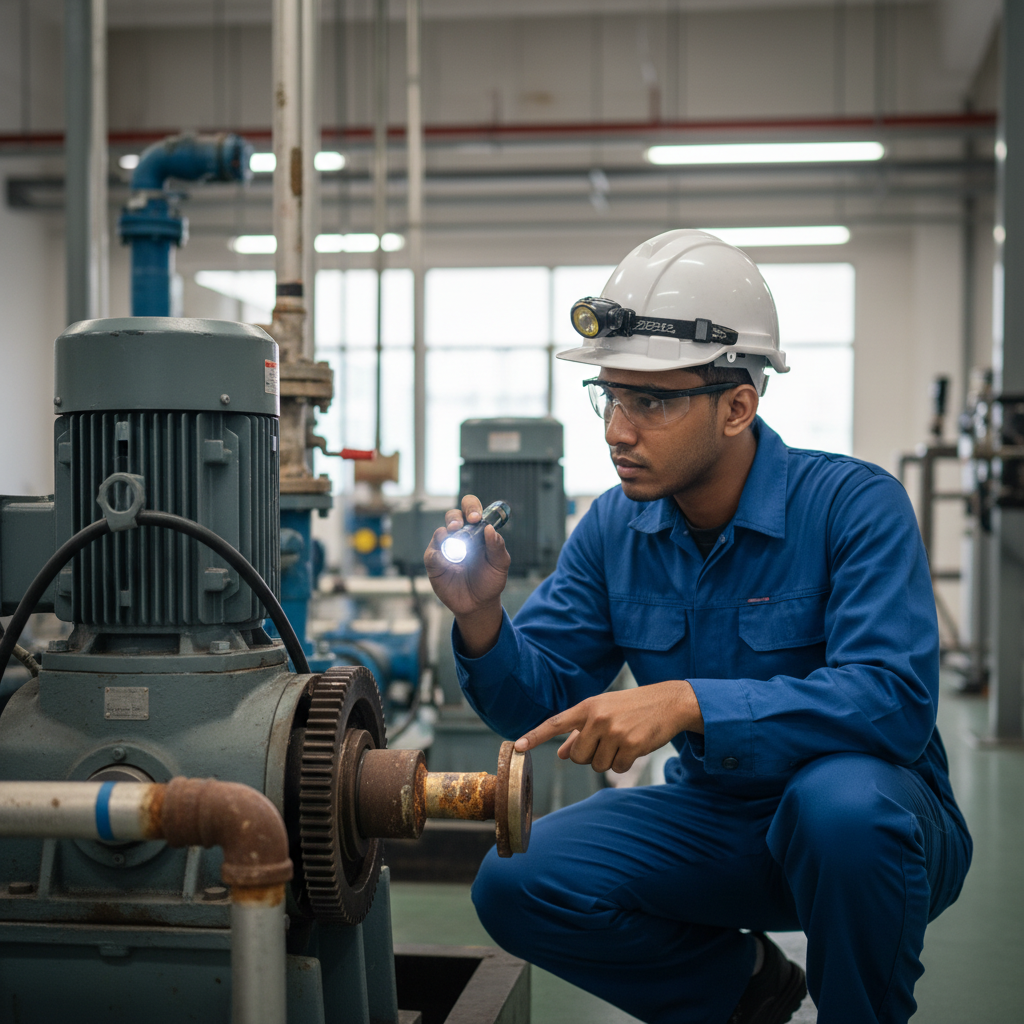
The final dimension to add to your risk assessment is equipment lifecycle. Consider the manufacturer's recommended service intervals and the age of each asset.
Equipment approaching the end of its designed lifecycle carries inherent risk regardless of its current condition. A chiller that has been running for 18 years when the manufacturer designed it for a 15 year lifespan is statistically more likely to experience a major failure, even if its recent maintenance history looks clean.
Ask yourself these questions for each high-criticality asset:
- Has the equipment been maintained according to the manufacturer's specifications throughout its life?
- When were the supplier recommended replacement parts last changed? Belts, filters, bearings, seals. Are any overdue?
- Is the equipment operating within its original design parameters, or has the load increased over time?
- Are replacement parts still readily available from the manufacturer, or is the model approaching end of life support?
This lifecycle perspective adds another valuable dimension to your risk assessment. Equipment that is aging, underserviced, and critical to operations should be flagged for closer monitoring or proactive replacement planning.
If Your Data Is Not There Yet, Start Building It
Many teams will read through these steps and realise they do not have the data to do this analysis properly. Breakdown records may be incomplete. PM completion rates may not be tracked. Equipment criticality has never been formally assessed.
That is okay. The important thing is to start collecting it now. Even 3 to 6 months of clean, connected data gives you enough to start making meaningful predictions about equipment reliability.
A CMMS makes this data collection automatic and structured. Cerev CMMS, for example, links every work order to a specific piece of equipment, tracks PM schedules with completion status and timestamps, and logs downtime records with duration and root cause categorisation. This connected data becomes the foundation for meaningful predictive analysis.
The key difference between a CMMS and a collection of spreadsheets is data connectivity. When your breakdown records, PM schedules, equipment registry, and work orders all live in the same system and reference the same equipment IDs, the analysis becomes straightforward. When they live in separate files with no shared identifiers, the analysis becomes a manual, error-prone exercise that most teams never complete.
The Journey, Not the Destination
Predictive maintenance is a journey, not a destination. Start with what you have. Collect what you do not. Build the habit of structured data collection, and the insights will follow naturally.
The teams that succeed are the ones who begin with the basics: clean data, criticality ranking, and systematic risk assessment. The AI and sensors can come later, and when they do, they will be far more effective because they are built on a solid foundation of well-organised maintenance data. Do not let the hype around advanced technology paralyse you from taking the practical first steps that deliver real value today.
Ready to optimize your maintenance operations?
Get in touch with our team to discuss how Cerev CMMS can help streamline your maintenance workflow and reduce costs.